Sleep Dentistry for Turkey Teeth Procedures: The Ultimate 2026 Patient Guide
Sleep Dentistry for Turkey Teeth Procedures
For millions of people around the world, the desire for a beautiful, healthy smile is constantly overshadowed by one powerful emotion: dental anxiety. The sounds of the clinic, the fear of needles, and the thought of sitting in a dentist’s chair for hours can be absolutely paralyzing. If you are dreaming of traveling abroad for a complete smile transformation but are terrified of the actual medical process, there is a modern, highly effective solution: sleep dentistry for Turkey teeth procedures.
You no longer have to let dental phobia stand between you and the confidence of a flawless smile. In 2026, premium Turkish dental clinics have perfected the art of sedation dentistry. By utilizing advanced medical anesthesiology alongside cosmetic dentistry, specialists can ensure that you sleep peacefully through your entire treatment, waking up only when your new smile is complete.
In this comprehensive, 2000-word medical guide, we will explore exactly what sleep dentistry entails, the different levels of sedation available, how it guarantees a pain-free experience, and how to safely plan your anxiety-free dental holiday.
What Is Sleep Dentistry for Turkey Teeth Procedures?
When patients inquire about do you get put to sleep for Turkey teeth, they are usually referring to a branch of medicine formally known as Sedation Dentistry.
Sleep dentistry uses specifically administered medications to help patients relax—or fall completely asleep—during dental procedures. Whether you are getting a full set of porcelain veneers, complex dental implants, or a full mouth reconstruction, sedation ensures that your body and mind remain entirely stress-free.
However, “sleep dentistry” is an umbrella term. Depending on your level of fear, your medical history, and the complexity of the dental work being performed, your Turkish dental team will recommend one of three distinct levels of sedation.
1. Oral Conscious Sedation (Mild to Moderate)
For patients with mild anxiety, oral sedation is often the first step. You will be given a prescription pill (typically from the Benzodiazepine family, like Diazepam or Midazolam) to take about an hour before your procedure begins.
- How it feels: You will feel incredibly relaxed, drowsy, and slightly euphoric. You will still be awake and able to respond to the dentist’s instructions (like “open wider”), but you will not care about the procedure happening around you. Many patients even fall into a light sleep but can be easily awakened with a gentle shake.
- Best for: Standard veneer preparations, single crowns, and patients who are afraid of needles but not terrified of the dentist.
2. IV Sedation (Deep Conscious Sedation)
Intravenous (IV) sedation is the most popular form of sleep dentistry for Turkey teeth procedures. A certified anesthesiologist administers a sedative directly into your bloodstream, meaning the medication takes effect in seconds.
- How it feels: You will enter a state of deep relaxation. While you are technically not fully unconscious (you breathe on your own), you will have absolutely no memory of the procedure, the noises, or the smells of the clinic. It feels exactly like a deep, restful nap.
- Best for: Patients with severe dental phobia, long appointments (like full mouth veneer preparations), and patients with a strong gag reflex.
3. General Anesthesia (Fully Asleep)
Under general anesthesia, you are rendered completely unconscious. You are placed into a deep, medically induced sleep by an anesthesiologist in a hospital-grade surgical theater.
- How it feels: You close your eyes, and a second later, you wake up in the recovery room with your dental work finished. You feel nothing, hear nothing, and remember nothing.
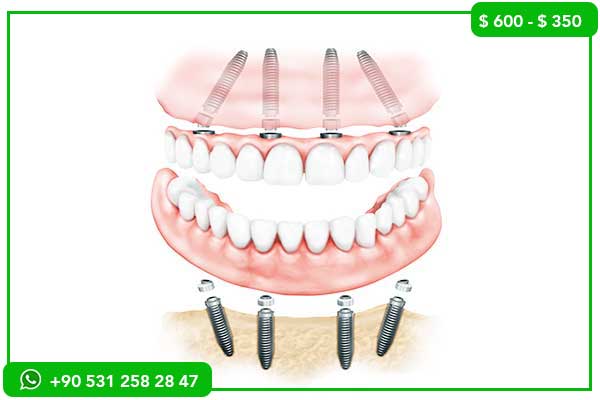
- Best for: Highly complex surgeries, such as full jaw bone grafting, zygomatic implants, or the All-on-4 dental implants Turkey protocol, as well as patients with profound, unmanageable dental terror.
Why Do Patients Request Sleep Dentistry? (The Benefits)
Choosing to utilize sleep dentistry for your smile makeover offers massive psychological and biological benefits. It is not just about avoiding fear; it actually improves the medical outcome of the procedure.
1. Total Eradication of Pain and Anxiety
The primary benefit is obvious: zero pain and zero panic. Dental anxiety causes the body to release adrenaline, which can actually make local anesthetics (numbing injections) less effective. By using sedation, your body’s fight-or-flight response is turned off. The dentist can administer the local numbing agents while you are asleep, meaning you never even feel the initial pinch of the needle.
2. Completing More Work in Fewer Appointments
Getting a full mouth of 20 veneers requires precision. The dentist must carefully buff the enamel of each tooth. If you are awake, your jaw will eventually get tired, you will need breaks to use the restroom, and your anxiety may spike as the hours pass. If you want to know the standard timeline, read our guide on how many hours does veneers take.
When you are under IV sedation, the dentist can work continuously, uninterrupted, for three or four hours. This allows them to complete what would normally take three separate appointments in just a single, highly efficient session.
3. Controlling the Gag Reflex
Some patients have an incredibly sensitive gag reflex, making it impossible for a dentist to take impressions or place tools in the back of the mouth. IV sedation temporarily suppresses the gag reflex, allowing the dentist to perform their work safely and comfortably without causing you distress.
4. Time Distortion
One of the most remarkable side effects of sleep dentistry is amnesia and time distortion. A four-hour full mouth preparation procedure will feel like it took exactly five minutes. You close your eyes, and instantly, the dentist is telling you that the work is beautifully finished.
Comparing the Sedation Options
To help you understand which level of sedation is right for your specific needs, here is a clear comparison table.
| Feature | Oral Sedation | IV Sedation | General Anesthesia |
| State of Mind | Very relaxed, groggy | Deep sleep, easily awakened | Completely unconscious |
| Memory of Procedure | Fuzzy / Partial memory | Zero memory (Amnesia) | Zero memory |
| Pain Level | None (combined with local) | None | None |
| Administration | Pill taken orally | Injection into the vein | IV + Inhaled gases |
| Medical Setting | Standard dental chair | Dental chair with monitoring | Hospital surgical theater |
| Recovery Time | 2 – 4 hours | 4 – 6 hours | 12 – 24 hours |
The Medical Journey: What to Expect When You Choose Sedation
If you decide that sleep dentistry for Turkey teeth procedures is the right path for you, your medical journey will be slightly different than a standard patient’s. Safety protocols require careful planning.
Step 1: The Pre-Sedation Medical Evaluation
Before you even travel to Turkey, the clinic will require a comprehensive medical history. You must disclose all medications you take, any history of heart or respiratory conditions, and your lifestyle habits (like smoking or alcohol consumption). Once in Turkey, the anesthesiologist will perform a physical evaluation, check your blood pressure, and review your EKG if necessary to ensure you are a perfectly safe candidate for sedation.
Step 2: Fasting Rules
If you are undergoing IV sedation or General Anesthesia, you will be required to fast. You must stop eating solid foods at least 8 hours before the surgery, and stop drinking clear liquids 2 hours before. This is a strict safety rule to prevent aspiration while you are asleep.
Step 3: The Procedure Day
You will be transported from your luxury hotel to the clinic via VIP transfer. Once seated comfortably, the anesthesiologist will place a small IV in your arm or hand. Within seconds, you will drift off into a peaceful sleep. Throughout the entire procedure, your heart rate, blood pressure, and oxygen levels will be monitored by medical-grade equipment.
Step 4: The Recovery Phase
When the dentist finishes preparing your teeth or placing your implants, the sedative drip is turned off. You will wake up gently in the dental chair. You will feel groggy and slightly confused for about 20 to 30 minutes. You will be moved to a private, quiet recovery room until the medical team clears you. Your VIP driver will then safely transport you back to your hotel to sleep off the remaining effects of the medication.
Important Note: You must have a companion with you, or utilize the clinic’s dedicated nursing staff, as you will not be allowed to navigate the hotel alone for the first few hours after waking up.
Risks, Safety, and Realistic Medical Guidance
While sleep dentistry is a modern medical marvel, it is not something to be taken lightly. As a patient, you must prioritize your safety over convenience. If you have been researching is it safe to get dental treatment in Turkey?, the answer regarding sedation is that it is incredibly safe only when performed by licensed professionals.
The Role of the Anesthesiologist
A general dentist should never administer IV sedation or General Anesthesia on their own while simultaneously performing dental surgery. Safe, premium Turkish clinics will always bring in a separate, board-certified medical Anesthesiologist whose sole job is to monitor your vitals, adjust the medication dosage, and keep you safe while the dentist focuses purely on your teeth.
Avoiding “Botched” Procedures
When you are asleep, you cannot tell the dentist if something feels wrong with your bite. This is why choosing a highly reputable clinic is paramount. Unethical “factory clinics” sometimes use sedation to rush through aggressive tooth filing, shaving healthy teeth down to tiny pegs without the patient’s active consent. This is a primary reason what can go wrong with Turkey teeth happens.
To ensure this never happens to you, you must demand absolute transparency. Before you are put to sleep, the dentist must provide a written, signed treatment plan detailing exactly how much enamel will be removed and what materials (like E-Max veneers) will be used.
Does Sleep Dentistry Add to the Cost?
Yes. Because sedation requires the presence of a specialized medical doctor (the anesthesiologist), advanced monitoring equipment, and specialized medications, it adds an additional fee to your overall dental package.
- Oral Sedation: Often included for free or requires a negligible fee ($50 – $100).
- IV Sedation: Typically adds between $300 to $600 to your overall package cost.
- General Anesthesia: Because this requires a hospital operating room and an extended recovery period, it can add $800 to $1,500 to your total bill.
Even with these additional fees, the total cost of your smile makeover in Turkey will remain significantly lower (often 60% to 70% cheaper) than undergoing a similar sedated procedure in a private clinic in the UK or the USA.
Why Choose Turkey for Your Sedation Dentistry?
Turkey’s medical tourism sector is heavily regulated by the Ministry of Health. Clinics that offer IV sedation or general anesthesia to international patients must meet strict hospital-grade standards. They must possess emergency resuscitation equipment, backup power generators, and fully sterilized surgical theaters.
When you book sleep dentistry for Turkey teeth procedures at a premium facility, you are not stepping into a standard local dentist’s office. You are stepping into a comprehensive, multi-disciplinary medical center designed specifically to cater to high-anxiety international patients securely and comfortably.
Overcome Your Fear Today
You do not have to live with a smile you hide, and you do not have to endure the paralyzing fear of the dentist’s chair. Through the modern miracle of sleep dentistry, you can wake up to a brand-new, healthy, Hollywood-level smile without ever feeling a single moment of pain or panic.
At Dentist Haifa, your psychological comfort and medical safety are our absolute highest priorities. We partner exclusively with clinics that employ board-certified anesthesiologists and prioritize conservative, pain-free dentistry.
Are you ready to sleep through your dental fears? Contact us today for a free, confidential consultation. Our medical coordinators will review your case, answer all your questions about our sedation protocols, and help you plan the stress-free dental holiday you deserve.
Frequently Asked Questions (FAQs)
What is sleep dentistry for Turkey teeth procedures?
Sleep dentistry (or sedation dentistry) involves the use of medication to help patients relax or fall completely asleep during their dental treatments. It ensures that complex procedures, like getting a full mouth of veneers or dental implants, are performed completely without pain, anxiety, or memory of the surgery.
Will I feel any pain if I get IV sedation?
No. When you are under IV sedation, you will enter a deep, sleep-like state. While you are asleep, the dentist will also administer local numbing agents to your gums. You will feel absolutely zero pain during the procedure, and you will not even feel the initial numbing injections.
Is it safe to be put to sleep for dental work in Turkey?
Yes, it is highly safe when performed in an accredited clinic. Premium Turkish clinics utilize board-certified medical anesthesiologists whose sole responsibility is to monitor your heart rate, oxygen, and blood pressure continuously while the dental surgeon focuses on your teeth.
How long does it take to wake up from IV sedation?
Once the IV medication is stopped, you will begin to wake up within 10 to 20 minutes. You will feel groggy and slightly disoriented for a few hours afterward. The clinic will keep you in a comfortable recovery room until you are fully alert and safe to be transported back to your hotel.
Can I eat before my sleep dentistry appointment?
If you are having IV sedation or General Anesthesia, no. You must strictly fast (no food for 8 hours, no clear liquids for 2 hours) before your appointment. This is a critical medical safety rule to prevent nausea and ensure your airway remains clear while you are asleep.
Do I have to get put to sleep for veneers?
No, it is completely optional. Most patients get veneers using only local anesthesia (numbing shots) and stay fully awake. Sleep dentistry is an optional service provided specifically for patients who suffer from severe dental anxiety, a strong gag reflex, or those who simply do not want to be awake for the hours required in the dental chair.
Does sleep dentistry make the Turkey teeth package more expensive?
Yes. Because IV sedation and General Anesthesia require a specialized medical doctor (an anesthesiologist) and hospital-grade monitoring equipment, it will add a surcharge to your overall package, usually ranging from $300 to $600 for IV sedation.